


Winter Berry Wreaths: Styles, Placement and Care Tips
By Rockdale Wreaths
Rockdale Wreaths Family
You hung the wreath two days ago. From the street it looks right. Up close, the berries have started to pucker and the lowest sprigs are already brittle. Or the wreath is still in its box, and you're standing in the entryway working out whether a berry-heavy design will survive a heated hallway, a porch that takes the wind, or a house with a Labrador who investigates everything at nose height.
Both situations come down to the same three questions. What is the wreath made of, where will it hang, and who can reach it? Winter berry wreaths aren't one product with one lifespan. They're a small family of designs, and how each one performs depends on the spot you give it and the household living around it.
Table of Contents
- Winter Berry Wreath Styles Compared
- Where to Display a Winter Berry Wreath and How Long It Lasts
- Caring for a Winter Berry Wreath Step by Step
- Troubleshooting Shriveled Berries and Dropping Leaves
- Berry Safety for Homes with Pets and Children
- Choose the Right Winter Berry Wreath for Your Space
Winter Berry Wreath Styles Compared
Six styles cover nearly every winter berry wreath sold for the holidays, and the differences that decide performance have nothing to do with the ribbon. They come down to berry density and the place the wreath will hang. Scan the table first, then read the two short explanations that follow it.
| Style | Core materials | Berry density | Best display location | Care note |
|---|---|---|---|---|
| Classic winterberry door wreath | Winterberry stems on an evergreen base | High | Covered front door | Keep out of direct sun and heat |
| Berry-accent evergreen wreath | Balsam or pine with winterberry sprigs | Medium | Front door or porch | Remove loose berries near pets and toddlers |
| Window or small wreath | Short winterberry sprigs on a mini base | Low to medium | Window or interior wall | Dries sooner near heating vents |
| Lighted winterberry wreath | Berry base with LED strings | Medium to high | Sheltered porch or window | Use only outdoor-rated lights outdoors |
| Cone, bow and non-berry wreath | Pinecones, bows and evergreen | None or minimal | Offices, homes with children or pets | Lowest berry-related risk |
| Custom or memorial wreath | Mixed greenery chosen by the buyer | Varies by design | Gift, cemetery or storefront | Confirm berry content before gifting |
Density drives two things at once. It sets how strongly the red reads from the curb, and it sets how much loose fruit you'll be sweeping up in January. A heavy berry design on a covered door with no small children in the house is a sound choice. That same wreath in an office lobby, where a toddler visits with a parent and staff wheel carts past the door, is not.
So work in this order: density and location first, appearance second. A household with a dog who counter-surfs or a two-year-old who climbs gets the cone, bow and non-berry design, and nobody feels shortchanged, because the shape and the greens still say Christmas. Wreaths were selected by 49% of surveyed holiday decorators in the United States in 2024, according to Field Agent's consumer research summarized by Storesight, so this is a decision almost half of decorating households made too.
Why winterberry sits on top of the greens rather than under them
Winterberry is Ilex verticillata, a deciduous holly native to North America. The USDA Forest Service profile of the genus describes a plant whose bright red fruit stays visible after the leaves drop, with a natural range running from Newfoundland west to Minnesota and south to Louisiana. That's a wide slice of the continent, which is why the same material turns up on doors in Maine and in Missouri.
The plant is not an evergreen. Its winter appeal is the contrast between bare stems and persistent fruit. Evergreen branches supply the frame, the weight and the green mass; winterberry supplies concentrated red. That division of labor explains why you'll almost never see a wreath built entirely from winterberry stems. It's an accent material, and a strong one.
The rule that runs through this article: density and location decide whether a design works. Color and ribbon decide only whether you like it.
One more consideration if you're buying in volume for a fundraiser or a storefront. Berry-heavy wreaths come from a plant with a job outside the house. The USDA winterberry factsheet reports that the red fruit is eaten by small mammals and by more than 48 bird species. That's a reason to buy from growers who harvest with the thicket's future in mind rather than stripping a roadside clean.
Where to Display a Winter Berry Wreath and How Long It Lasts
Placement decides more than style does. The same wreath on a shaded porch and on a sun-blasted gate can differ by weeks of usable display, which is why the table below is organized by location rather than design.
| Location | Sun and wind exposure | Expected outlook | Suitable berry load | Hanging note |
|---|---|---|---|---|
| Covered front porch door | Shaded and sheltered | Longest outdoor life | Full berry design | Over-the-door hanger on wood or metal |
| Exposed front door | Wind and rain | Shorter; secure lower greens | Lighter berry load | Clear fishing line or ribbon; avoid adhesive on paint |
| Sunny porch or gate | Strong sun | Fades and dries fastest | Low to medium | Hang on the shaded side if possible |
| Indoor window or hallway | Warm, dry air and drafts | About 7 to 10 days fresh | Small or low-berry design | Keep well away from heating vents |
| Office or storefront | Heated interior and foot traffic | Shorter indoors; check weekly | Non-berry preferred | Check height and access for staff and visitors |
| Cemetery | Wind and weather, exposed | Shortest in warm, dry or windy spells | Weather-tolerant design | Use a cemetery hanger or stake |
Cut berry stems are sensitive to water loss, temperature and airflow, and that sensitivity sets the clock. Oregon State University Extension names moisture loss and defoliation as the main quality problems in cut holly, and its postharvest guide for cut greens notes that leaves may begin dropping within 7 to 10 days even under proper storage, with cool, humid handling slowing decline and warm, dry weather speeding it up. Handle stems above freezing but out of wind and strong sun, hydrate them before assembly, and keep the finished wreath clear of heaters, vents, drafts and direct light.
Three doors, three different answers
A covered porch in a cold climate. Picture a shaded door in a northern town, under a porch roof, out of the prevailing wind. Cool air holds moisture in the stems, so a full berry design is reasonable and the roof keeps rain off the fruit. The risk here is meltwater dripping from the eave and a door that swings into a snowbank.
A sunny porch in a warm state. Sun and warm air pull moisture from cut stems fast. A lighter design on the shaded side of the porch will outlast a heavy one in full sun, and a wreath checked every few days beats one checked at the end of the month. If the only spot faces the sun, plan on a shorter run.
A heated apartment hallway. This is the least forgiving placement. The Iowa State University Extension holiday wreath guide puts fresh-cut wreaths at 7 to 10 days indoors because warm, dry air accelerates moisture loss, recommends removing the wreath once it's dry, and notes that careful indoor care can stretch fresh greenery to about two weeks, with cooler outdoor placement more favorable. Use a small wreath, position it far from the vent, and expect it to finish earlier than a porch wreath.
Hanging hardware that won't mark the door
An over-the-door hanger suits wood or metal entries and needs no holes and no glue. Heavy adhesive strips are the wrong tool on painted or stained finishes, because they lift the finish when they come off. On an exposed door, run clear fishing line from the wreath frame to the hanger to stop the lower greens from swinging, and use painter's tape to mark the hook position before you commit.
Check that the greenery clears the handle, the latch and the trim while the door swings. A storm door adds its own clearance problem, and this guide to hanging a wreath on a storm door covers the bracket choices that avoid a crushed wreath.
For indoor displays above a mantel, heat rises and dry greenery suffers near a bulb. The sconces and pendants for holiday mantels at Golden Lighting show how to light the arrangement from a distance rather than putting a warm bulb against the stems.
Caring for a Winter Berry Wreath Step by Step
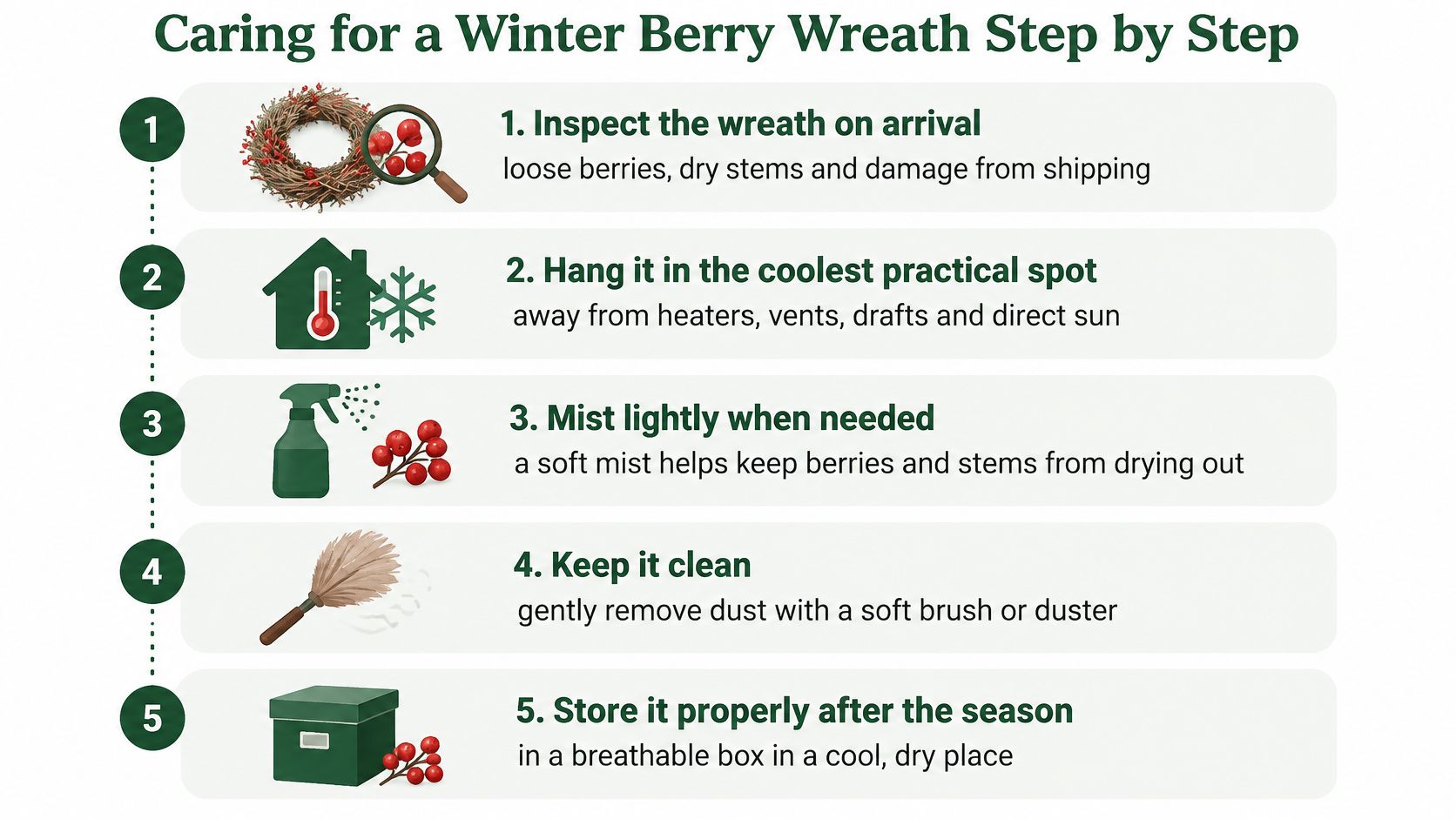
A wreath over a busy hallway radiator and the same wreath on a shaded porch need different attention, because cut greenery only loses water and never gains it back. The routine below takes only a few minutes a week, and each step has a reason that matters more than the ritual.
-
Inspect the wreath the day it arrives. Look for loose berries in the box, dry or cracked stems, and flattened sections from shipping. Damage found now is fixable; damage found in ten days usually isn't.
-
Confirm the spot still works as the season wears on. A radiator that was barely warm when you hung the wreath may run hard by mid-winter, and winter sun shifts across windows and doors. In a dry room, check the wreath every three days.
-
Keep the air moderately humid. Mist the greenery lightly every few days, and don't soak the berries. Misting slows drying in a cool room, though it cannot offset a spot next to a vent.
-
Read the wreath, not the calendar. Plump berries and leaves that flex when you bend one are good signs. Berries that dent under a fingertip or foliage that crackles mean the clock is running down.
-
Keep flames and heat sources clear. Candles, fireplaces and space heaters belong well away from dry greenery. A dry wreath is combustible material hanging on a door, and treating it that way costs you nothing.
-
Shelter outdoor wreaths from drying wind. A wall or door recessed from the prevailing wind keeps more moisture in the stems than an exposed post or gate.
-
Take it down with your household in mind. Once berries loosen, they drop within reach of pets, small children and foot traffic. Bringing the wreath down while the fruit still holds beats finding scattered berries under boots or in a curious mouth.
Stored cut material keeps better cool and moist before assembly, which is why the first few days after a wreath is built matter most. If you're holding a wreath before gifting or displaying it, this guide to wreath storage, maintenance and refreshing covers the holding period in detail.
Here's the sign-off check. Bend one leaf and roll a berry between your fingers. If the foliage flexes and the fruit is firm, the routine is working and you can leave the wreath alone.
For a visual pass over the same routine, this walkthrough runs from the arrival check to the final placement.
Troubleshooting Shriveled Berries and Dropping Leaves
Read the symptom before you reach for a fix. Shriveling, dropping and fading each have their own cause, and treating the wrong one spends the good days the wreath still has left. The middle column gives a quick check to confirm the cause before you act.
| Symptom | How to confirm the cause | Fix |
|---|---|---|
| Shriveling berries | Shrivel on the side facing the room or a window points to warm, dry air; even wrinkling all over is age | A cooler spot slows it; dented berries stay dented |
| Leaves dropping | A light drop in the first days after hanging is settling; a steady fall of crisp brown leaves is moisture loss | Keep it cool and take it down once the foliage turns brittle |
| Berries falling off | Whole clusters coming loose means handling or knocks against the frame; single berries mean freeze-thaw or dryness | Wire loose clusters to the frame and check the box and doorstep after delivery |
| Brittle, crackly greenery | The foliage crackles under a light touch while the berries still look sound | Misting cannot rehydrate it; read crackling as a sign the spot runs too dry for fresh greens |
| Mold or sour smell | Check the back of the bundle where the greens press flat against the door | Air it out in a cool room and discard it if mold is visible |
| Fading red color | Fading only on the sunlit side is bleaching; even fading is age | Move it out of direct sun |
Which fixes buy a day and which buy a week
A move away from a vent or a radiator works within hours, and the fruit looks firmer by the next morning. Shifting the wreath out of direct sun and rewiring a section that swings against the door frame pay off just as fast.
Light misting and a cooler room slow the decline without reversing it. Water on dried greenery works like water on a cut flower that has gone crisp in the vase: it freshens the surface while the hardened tissue underneath stays damaged. Once berries have dented and stems have stiffened, what you gain is a slower fade.
Loose berries come from handling. Twist a short length of fine floral wire around the cluster to hold it to the frame, and check the box and doorstep after delivery so no loose fruit sits where a pet or a crawling child can reach it.
Trapped moisture inside a dense bundle of greens and a sour smell mean the wreath has failed and should be discarded.
Give a fix one full day before you judge it. If the wreath is mostly bare, brown throughout, or showing visible mold after a day of drying in a cool room, replace it. The same rule applies after a warm spell outdoors: a wreath that dried hard will not come back with misting.
Berry Safety for Homes with Pets and Children
Who can reach the wreath determines the risk. The same shipped wreath is harmless in an empty apartment and hazardous in a home with a puppy, because winterberry safety lives at floor level, where berries drop and where dogs and toddlers do their exploring.
Extension guidance identifies winterberry, holly, yew, inkberry, rhododendron and boxwood as poisonous if consumed, and veterinary guidance flags winterberry toxicity for dogs, cats and horses, as the University of New Hampshire Extension guide to holiday greens sets out. Treat the wreath the way you would a potted plant on a high shelf: fine to look at, a problem only when plant parts end up in a mouth.
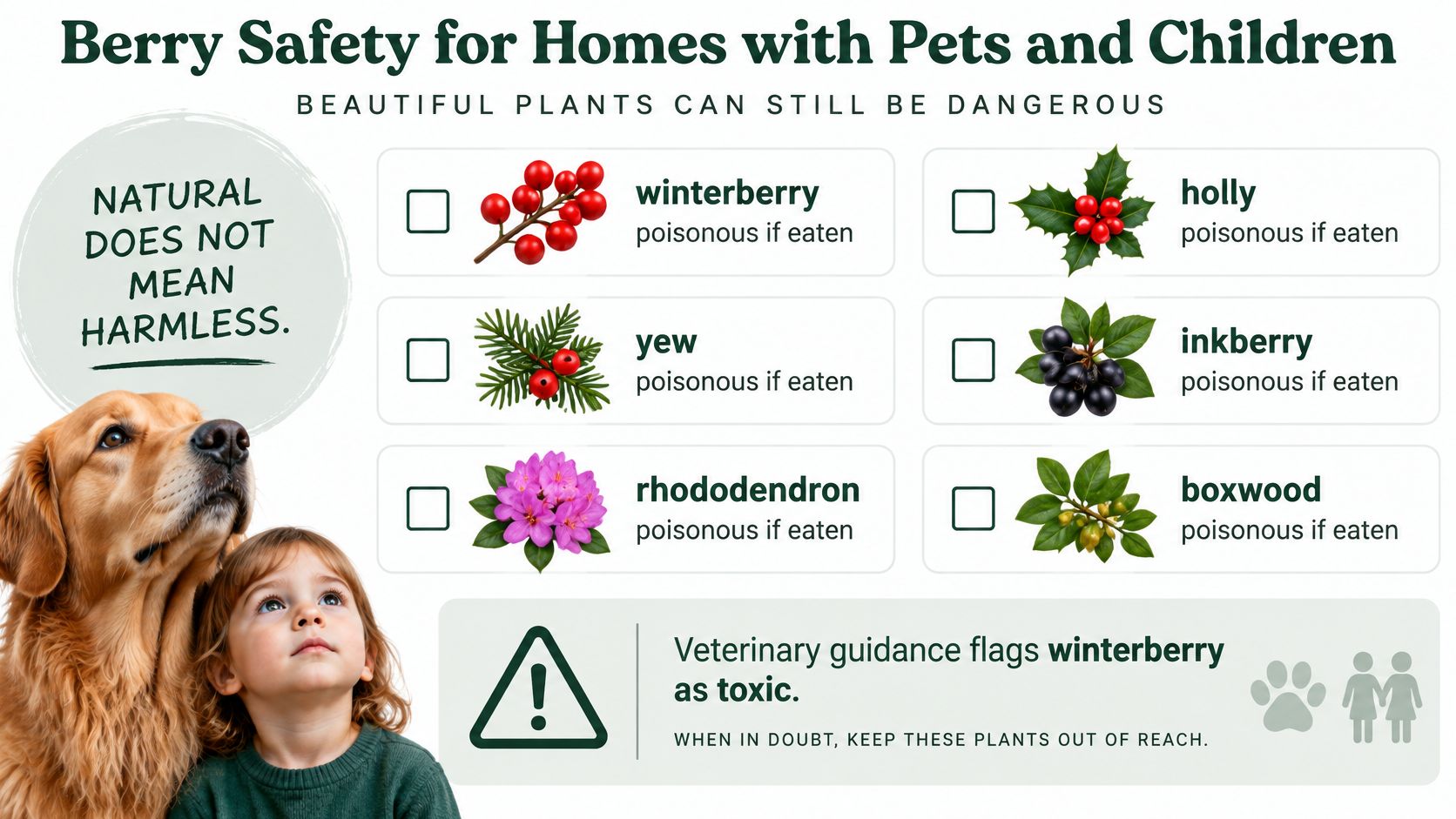
A working checklist for a household with animals or small children:
-
Identify before you assume. Confirm what's on the frame. Berry-like red accents on budget wreaths are sometimes plastic, and sometimes not.
-
Clear the first 48 hours. Inspect the shipping box, the doorstep and the floor under the wreath right after delivery. Berries knocked loose in transit are the first ones a pet will find.
-
Sweep the drop zone. Check under the door, on the mat and along the baseboard every few days during the first week, then whenever you notice shriveling.
-
Hang above reach. A dog on hind legs and a toddler on tiptoes both reach higher than you'd expect, so mount the wreath well clear of paws and hands.
-
Discard fallen fruit properly. Into a lidded bin, not onto the garden bed where a dog noses through it.
-
Ask before gifting. One text about children, cats and dogs tells you whether berries belong on that door at all.
If a child, cat or dog may have swallowed berries, contact local poison control or a veterinarian immediately and keep a piece of the plant material for identification. For dogs in particular, Get Pet Vet's dog poisoning triage framework lays out which signs call for an urgent visit and which can be monitored at home, so a small nibble gets a measured response rather than panic or delay.
Choose the Right Winter Berry Wreath for Your Space
A winterberry wreath has no fixed lifespan of its own. On a shaded, covered door it holds its berries for weeks; the same wreath above a heating vent, within reach of a curious puppy, becomes a different object entirely. The spot and the household decide nearly everything, so the choice comes down to four steps in order.
-
Match the style to the spot. The placement table ties each location to a design and a timeline: covered doors carry a classic winterberry or berry-accent evergreen, exposed or sunny doors need a lighter build secured against wind, and heated indoor walls suit small window wreaths or cone and bow designs.
-
Set the hanging method and height. Mark the position with painter's tape before you drill or stick anything to the door. Where toddlers or grazing animals live, height is a safety decision as much as a visual one.
-
Set the care routine to the room. Keep the misting interval and weekly check from the care guide, and expect indoor wreaths near heat to dry out faster than outdoor ones.
-
Choose the removal date now. A wreath taken down on a calm, dry day leaves cleanly. One left until it starts shedding chooses its own exit.
If you are buying rather than making, Rockdale Wreaths offers door, window, large, custom and LED-lighted wreaths, along with designs such as the Blue Wreath. Berry content varies between designs, so confirm it before ordering when pets or small children share the home. Sizing is a separate decision, and this guide to finding the ideal wreath size for the door settles it faster than guessing from a photo.
Before ordering, run two checks: hold the spot up against the placement table, and hold the household up against the safety checklist. If either answer changes, change the wreath rather than the routine.
Rockdale Wreaths makes fresh balsam wreaths on its family farm in Jonesport, Maine, and ships door, window, large, custom and LED-lighted designs to the 48 contiguous states. If you're weighing a berry-heavy classic against a berry-light design for a home with pets or a busy office, their team can tell you what's on the frame before you order. Visit Rockdale Wreaths to see the current styles and pick the one that suits your door.

